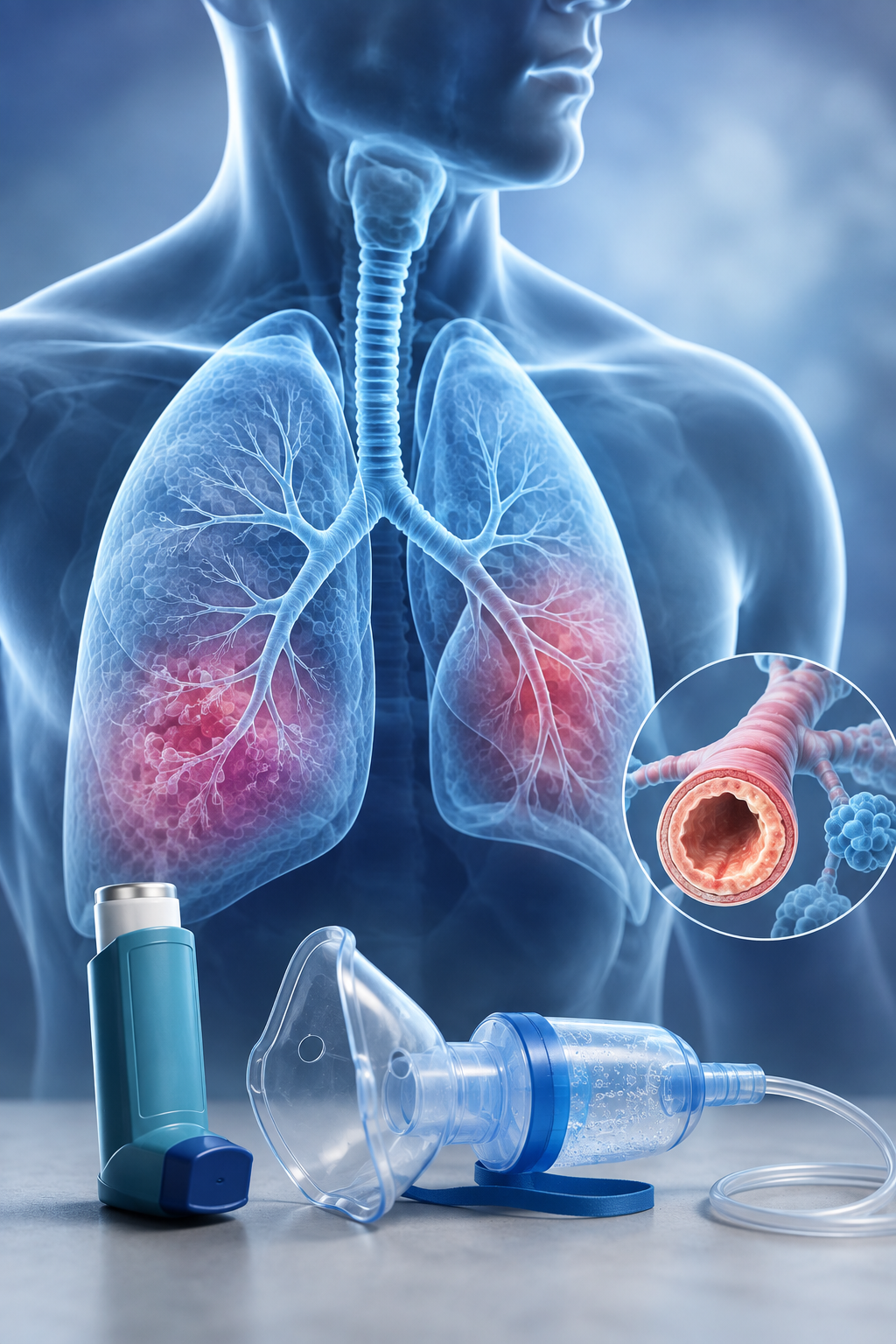
Short answer: In bronchoscopy, the windpipe and bronchi are examined with a thin camera. The camera is passed through the mouth or nose. Treatment can also be carried out during the same procedure. The procedure is done with medicines that make you sleepy (sedation) or under general anaesthesia. For this reason, pain is not expected. There is no skin incision. Advanced age alone is not a barrier. Still, like any interventional procedure, it has risks and requires patient selection.
Misconception 1: “Bronchoscopy is a very painful procedure.”
Bronchoscopy for diagnosis is usually done with sedation and local anaesthesia. Procedures for treatment (therapeutic procedures), however, are mostly done under general anaesthesia. Pain is not expected during the procedure. Afterwards, you may have a temporary sore throat and a cough.
Misconception 2: “Bronchoscopic treatment is an operation.”
Bronchoscopic methods involve no skin incision, no stitches and no chest tube. The procedure is done through a natural opening of the body. That is why it is called an “interventional procedure” rather than an “operation”. Balloon bronchoplasty and endobronchial valve procedures belong to this group. Comparison: Bronchoscopic treatments for COPD
Misconception 3: “It cannot be done in elderly patients or in patients who use oxygen.”
Advanced age or oxygen use is not, on its own, a barrier. The decision is based on your breathing capacity and any other illnesses you have. The pre-anaesthetic assessment is also important in this decision. The published series also included patients receiving oxygen support.
Misconception 4: “Bronchoscopy cures COPD completely.”
No bronchoscopic method gets rid of COPD. The aim is to ease shortness of breath. To do this, blockages that medicines cannot open, or air trapping, are reduced. The benefit varies from person to person. For the studies: Scientific studies
Misconception 5: “It is risk-free.”
As with any bronchoscopy, bleeding and a temporary drop in oxygen level may occur. Infection, a COPD flare-up or problems related to anaesthesia may also occur. These are closely monitored during and after the procedure. The possible risks are explained to you in detail before the procedure. Details: Is it safe? Risks and side effects · What is bronchoscopy and how is it done?
References
- Global Initiative for Chronic Obstructive Lung Disease. GOLD Report 2026.
- Hartman JE, et al. New bronchoscopic treatment modalities for patients with chronic bronchitis. Eur Respir Rev. 2021;30:200281.
- Karakoca Y, et al. Follow-up outcomes of COPD patients who underwent dilatation and curettage with the Karakoca resector balloon. Medicine (Baltimore). 2018;97(48):e13400.
This article is for general information purposes. It does not replace a medical examination and diagnosis. Treatment decisions are made at the consultation, on an individual basis. Medical content review: Prof. Dr. Yalçın Karakoca, Pulmonologist · Last updated: 25 September 2026