THE DEVICE
Karakoca Resector Balloon: The Story of the Device and the Method
Prof. Dr. Yalçın Karakoca · Last updated: 25 September 2026
SHORT ANSWER
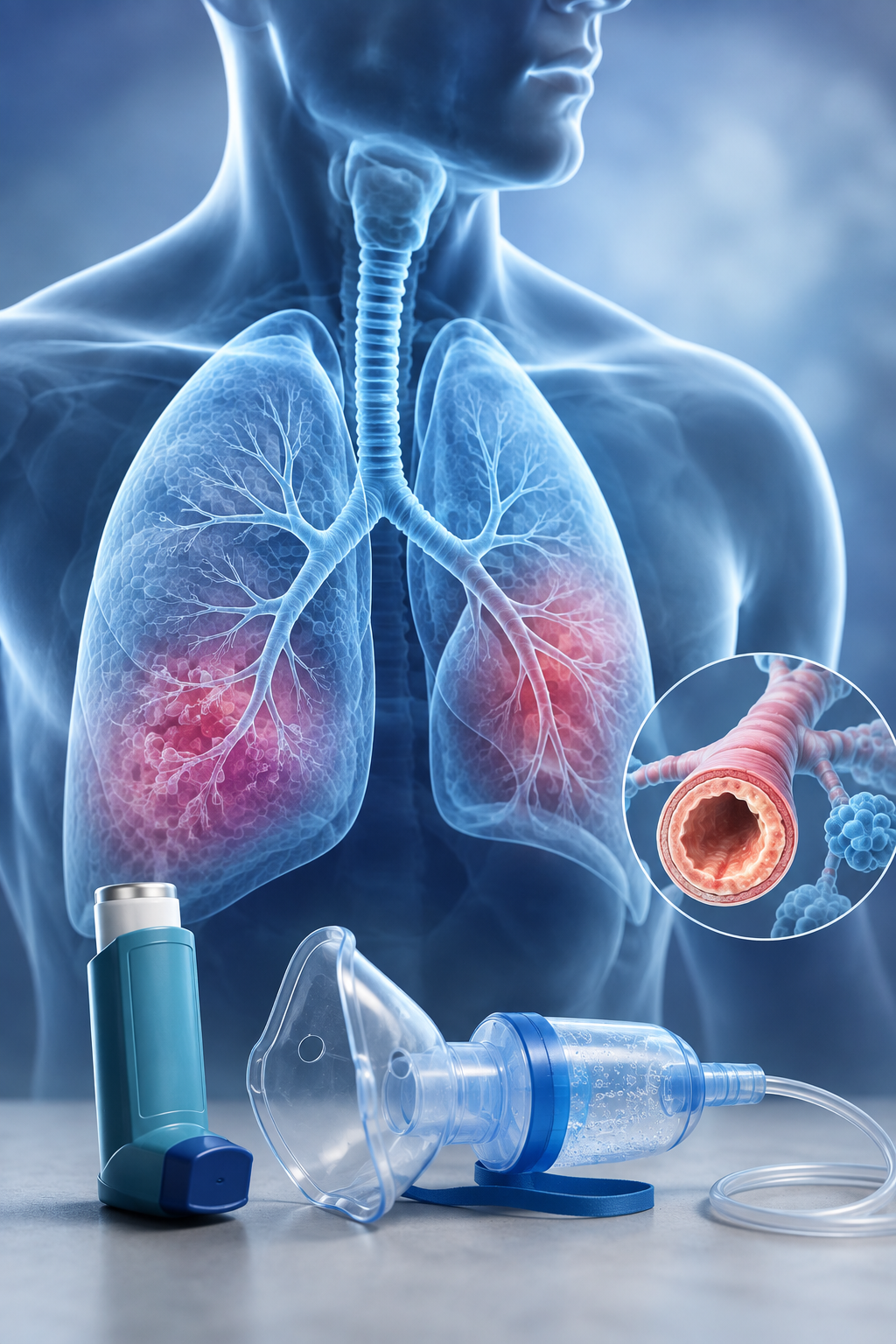
The Karakoca Resector Balloon is a special balloon developed by Prof. Dr. Yalçın Karakoca. The balloon is covered with a fine mesh. It is placed in the airways through a tube with a camera at its tip (bronchoscope). There, it is inflated and deflated several times. The mesh surface clears away the thickened tissue and mucus that narrow the airway. The balloon is removed at the end of the procedure; it does not stay in the body. It is manufactured in Istanbul and is single-use. It has a US patent and a European Union design registration.
What is the device like?
- Balloon: It is made from protein-free latex. It is inflated and deflated in a controlled way.
- Mesh covering: The balloon is covered with a very fine mesh (approximately 0.2 mm). When the balloon is inflated, the mesh grips the inner lining of the airway and has a cleaning effect. This is how it differs from conventional balloons with a smooth surface.
- Different sizes: It is made in six different sizes to suit the width of the airway.
- Use: It can be used with both flexible and rigid bronchoscopes.
- Sterile and single-use: A new, sterile balloon is used for each patient.
How does it work?
The narrowed airway is reached with a bronchoscope. The balloon is placed inside the airway and inflated and deflated several times in a controlled way. The mesh surface clears the thickened tissue and mucus from the inner lining of the airway. The aim is to open the airway without leaving a device in the body. The same method is also used in other situations. For example, a tumour blocking the airway or overgrown healing tissue can be cleared.
What is it used for?
- COPD: It is used in advanced COPD in which cough and phlegm predominate. It aims to open the narrowed airways. Details: COPD balloon treatment
- Narrowing of the windpipe and bronchi: Healing tissue (granulation tissue) can overgrow and block the airway. This tissue is cleared with the balloon. Details: Airway narrowing
- Lung cancer: It may help to open an airway blocked by a tumour. Details: Opening the airway in cancer
You can find publications on the method on the Scientific Publications page.
A brief history
- 2006: The first procedures were performed in Istanbul.
- 2008: The method and the device were described for the first time in an international medical journal.
- 16th World Congress for Bronchology (Tokyo): The method was presented at an international meeting.
- 2015: The first applications in COPD were published.
- 2018: Results from a larger group of patients with COPD were published.
- 2019: The European Union design registration was obtained.
- 2023: The US patent was granted.
The name of the method
At different centres, the method may also be referred to as “resector balloon”. Whichever centre you go to, you can ask questions of the team that will perform the procedure. Ask about their experience, the device that will be used and how they select patients. At the consultation, we explain all of this to you openly.
How it differs from the Karakoca Valve
The Resector Balloon is used in COPD in which cough and phlegm predominate. It is a procedure aimed at the inner lining of the airways, and it leaves no device in the body. The Karakoca Valve, on the other hand, is a one-way valve used in emphysema. It is placed to deflate the part of the lung where air builds up. It can be removed if necessary. The two devices are intended for different types of COPD.
PRELIMINARY ASSESSMENT
Is it suitable for you?
Book an appointment and bring your breathing test and chest CT scan reports. We decide together at the consultation. If you are coming from outside Istanbul, an online preliminary consultation can be held first.
Please bring: your breathing test, your chest CT scan report and images (CD/USB), your list of medicines and, if you have one, your blood gas test result.
SCIENTIFIC STUDIES
HAVE A QUESTION?
Frequently asked questions
The questions our patients and their relatives ask most often, with answers. We discuss questions about your own situation together at the consultation.
Is a resector balloon the same as a normal balloon?
No. A normal (smooth) balloon widens a narrow point using pressure. A resector balloon, however, has a mesh surface. This surface clears the thickened tissue and mucus from the inner lining of the airway.
Does the device stay in the body?
No, it is removed at the end of the procedure.
Does it have a patent?
Yes. It has a US patent (US 11833318, 2023) and a European Union design registration (2019).
Is it only used in COPD?
No. It is also used to clear a tumour blocking the airway. It is also used for overgrown healing tissue and for some types of narrowing of the windpipe.
APPOINTMENT
Book an appointment for a preliminary assessment
For questions about the device and the method: info@yalcinkarakoca.com · +90 530 337 85 95
info@yalcinkarakoca.com · Rüzgarlıbahçe Mah. Cumhuriyet Cad. Hasoğlu Plaza Kat:3, Kavacık / Beykoz, İstanbul
This page is for general information purposes. It does not replace a medical examination or diagnosis. Treatment decisions are made during an examination, on an individual basis. In an emergency, call 112.
Medical content review: Prof. Dr. Yalçın Karakoca, Pulmonologist · Last updated: 25 September 2026